

5 Office Trends Changing the Way We Work in 2026
The office isn’t what it used to be, and that’s a good thing. As working patterns continue to change, today’s businesses are rethinking what they actually need from their workspace. By 2026, offices are less about rows of desks and more about supporting how people really work and connect with one another.
From flexible layouts to smarter technology and more thoughtful design, here are five office trends shaping the future of work in 2026, and how a serviced office can help you stay on trend.
Zoning
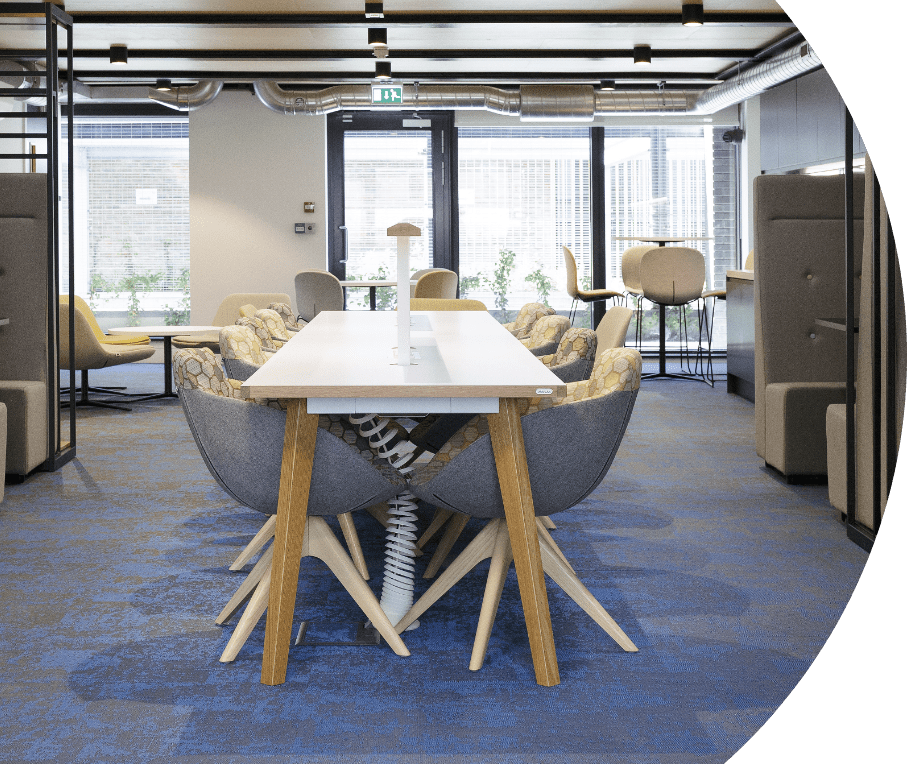
Offices are moving away from one-size-fits-all layouts and towards spaces that serve different purposes throughout the day. Instead of one large open-plan area, modern offices are being broken into zones. There are quieter spaces for focused work, relaxed corners for informal chats, and collaborative areas that feel more like a hotel lounge than a traditional meeting room. The line between “work” and “break” is softening, giving people the freedom to move to the space that suits what they’re doing.
Bridging the Remote Gap
Work no longer happens in just one place, and offices are adapting to reflect that. Today’s workplace is part of a wider ecosystem that includes home offices, shared hubs and digital platforms. As employees move between home, office and everything in between, businesses need spaces and technology that make those transitions feel easy.
With remote work now a long-term reality, and a surge of digital nomad visas opening up truly borderless ways of working, offices in 2026 need to support collaboration across locations and time zones without making people feel disconnected from the team.
Hyper-Personalisation
The future office is far more personal than it used to be, especially as design becomes more human-focused in 2026. Rather than forcing everyone to work in the same way, businesses are designing offices that adapt to different needs and working styles. When people feel comfortable and considered, they’re happier and more productive as a result.
This also means creating more inclusive environments. From quieter areas and softer lighting to furniture that feels less corporate and more home-like, hyper-personalisation helps make offices places people actually enjoy spending time in.
Multi-Functional Meeting Rooms
Meeting rooms are becoming smarter, more flexible and far more useful. In 2026, they’re no longer uniform spaces booked for every type of meeting. Instead, offices are investing in rooms designed for specific purposes, whether that’s private conversations, team workshops or collaborative sessions.
Better acoustics, natural light and adaptable layouts all help meetings feel more focused and less draining. Spaces can expand or contract depending on what’s needed, while thoughtful placement keeps noise and disruption to a minimum.
Sustainable Style
Sustainability now isn’t seen as something businesses can treat as a design extra. By 2026, it’s becoming part of how modern offices operate day to day.
Serviced offices are already moving in this direction, with spaces designed to be reused, efficiently managed and powered more responsibly. From energy-efficient systems running quietly in the background to thoughtfully maintained interiors that reduce unnecessary waste, sustainability becomes part of everyday office life, without teams needing to think about it.
Serviced Office In 2026?
The offices of 2026 are flexible, people-focused and designed to adapt. They support different ways of working, changing team sizes and evolving business needs… all without feeling rigid or outdated.
That’s why serviced offices continue to make sense for so many businesses. With flexible layouts, modern design and situated in today’s most loved locations – like Manchester, London and Telford – they’ll make sure your space stays up-to-date.
Got big plans for 2026? Book a tour at one of our serviced offices today.
Get in touch.
If you’re interested in a property and would like to enquire about prices, packages or
would like to arrange a tour, the form below
Related Articles

