Manchester serviced office providers support city’s growth

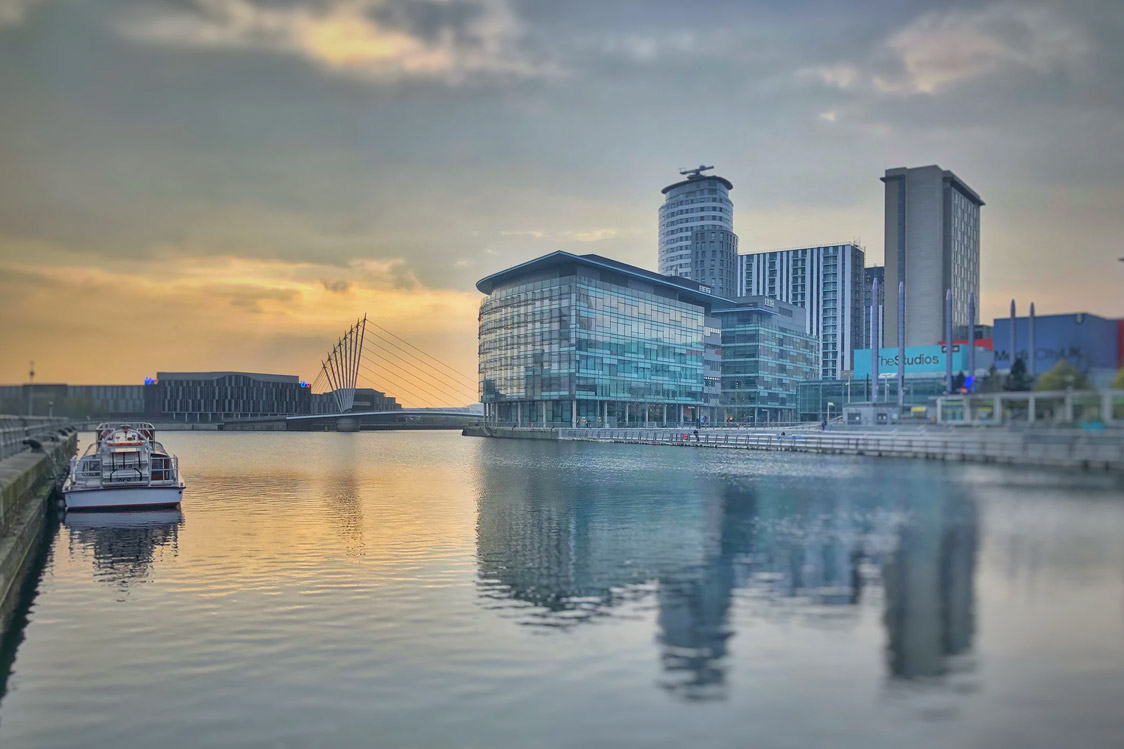
Demand for office space in Manchester is likely to be driven in 2021 by businesses opening a ‘north shore’ for their operations and by serviced offices in Manchester and Salford, according to a Deloitte UK report.

The analyst’s Manchester Crane Survey 2021 notes that in 2020, 36% of office floor space under construction in the city was already pre-let.

“However, new workspace moves for businesses coming into either Manchester or Salford were delayed temporarily and occupation of let space is unlikely to be made until mid-2021 at the earliest,” it adds.

The report predicts that during 2021, further take-up of Manchester office space will be in serviced office buildings, as well as government departments and north-shoring businesses.

The big return to office life

The past 12 months saw offices up and down the UK affected by the COVID-19 restrictions, including changes to seating layouts, minimum distancing between employees and efforts to improve ventilation and cleanliness.

But the roll-out of Coronavirus vaccines means that in 2021, a return to more normality may be achievable – and the Deloitte UK report lists several advantages of office working that will entice employees back from working at home.

They include:

  • An environment where ideas can be exchanged.
  • A place for collaboration to take place.
  • A way to support flexible working arrangements.

Deloitte adds: “To further incentivise a return to the workplace over the longer term, we may see physical and functional adaptations to allow for more focus on collaboration and opportunities for flexible working.”

Premises in the pipeline

Serviced offices in Manchester and Salford could see greater demand in 2021-22 due to a subdued pipeline of new premises in the post-COVID period.

At the end of 2020 there was 39% less office floor space under construction in Manchester, compared with the start of the year.

The number of new construction starts in 2020 was also down by two fifths, compared with the yearly average dating back to 2007.

As this feeds through into new office completions over the coming few years, businesses may instead look to Manchester serviced office providers for the floor space and flexible terms they need.

Combining physical and virtual offices

For businesses that want to continue a primarily home-based workforce, virtual offices in Manchester and Salford are an option, providing a professional public appearance for staff based at home – or anywhere else, for that matter.

The Serviced Office Company operate virtual offices in Salford Quays from our physical serviced office buildings on Clippers Quay and Exchange Quay, as well as on the Isle of Dogs in London.

Combined with meeting rooms for hire on the premises, this gives you everything you need to set up a virtual northern branch, operate a mixed-mode workforce with employees in-person and others at home, and grow your business as the economy bounces back post-COVID.

For more information about renting serviced office space in Manchester or London, email us at info@servicedofficecompany.co.uk, call us on 0800 319 6600, or fill in our online enquiry form and we’ll get back to you as soon as possible.


SMEs and entrepreneurs seek flexible office space for 2021

The COVID-19 pandemic forced many people to work from home in 2020, but as restrictions are eased in the post-pandemic period, flexible office space may prove to be an important stepping stone back into the workplace.

Jane Sartin, executive director of the Flexible Space Association, says there will be “a degree of permanency” to some of the changes that occurred during 2020, as people look for a balance between the benefits of working at home and of having a designated workplace.

In an article on the Association’s website, she explained: “Many people will find a mix of working from home and at an office to be effective, both professionally and personally.

“Businesses having seen remote working is viable may now see financial appeal in not having to provide a dedicated desk for every employee.”

Why not work at home?

Lockdown restrictions meant that, across the UK, those who could work from home were asked to do so as much as possible – and that had some immediate advantages as it allowed employees to experience life without a morning commute or an evening rush hour.

However, Ms Sartin noted that there are downsides to working alone at home:

  • No ad hoc conversations to spark new ideas.
  • No learning opportunities by observing colleagues.
  • No variety of surroundings day after day.

She added: “We’re not only working from home; we’re simultaneously living at work.”

Flexible space such as serviced offices bridges the gap between homeworking and having a permanent workplace, allowing employees and entrepreneurs to get a much-needed break from the kitchen table or spare bedroom and return to a dedicated office environment.

Little and large

Ms Sartin said the Flexible Space Association has seen demand from large and small organisations, starting from as little as one-person offices.

“High demand for 1 to 3-person offices has been a clear theme, as people look for workspace near to home rather than at home,” she wrote.

“Large companies are starting to examine the merits of workspace which doesn’t tie them to a fixed amount of space for years to come, and can perhaps see them based in more locations.”

Whether you are an individual entrepreneur, an SME or a large corporation, serviced offices in London and Manchester hold the potential to meet your unique needs, whether it’s a flexible workplace near you, or an affordable way to start trading in a new location.

Stay at home with virtual offices

Finally, if you have found working from home a sustainable long-term solution, there’s no reason why you should feel obliged to return to working from a physical office.

Our virtual offices in London and Manchester give you real-world contact details at our serviced office buildings, complete with postal address and telephone number, but you don’t physically work in the premises.

Instead, you can work from home – or any location of your choosing – while we present a professional client-facing appearance and forward any business communications over to you.

You can choose

The pandemic brought unprecedented disruption, but for many entrepreneurs, SMEs and big businesses it was also an opportunity to experience a new way of working.

As the economy gets back on track over the course of 2021, it’s up to you to decide which of the benefits you want to keep hold of, whether that’s more flexible terms on serviced office space, or working from home via a virtual office instead.

Gen Z: 1 in 5 want to start a business in London

Over a fifth of young working-age adults want to start a business in London, according to a poll commissioned by Mushroombiz.

The SME services provider’s research found 21% of Londoners have ambitions to launch a business in 2021, compared with a national average of 15% of 18 to 24-year-olds.

Despite the COVID-19 pandemic – and perhaps because of it – the number of new business start-ups in the second half of 2020 was significantly higher than the year before.

In July alone, over 80,000 new businesses were registered in the UK, and the survey found 19% of young workers thought about starting a business for the first time during 2020.

Ed Surman, managing director of Mushroombiz, said: “This reality has forced many young people to re-evaluate their futures and become their own boss.”

Taking control of career prospects

The results are an indication that more working-age under-25s are grasping their own careers as the economic impact of the pandemic starts to become apparent.

Before the Coronavirus outbreak, unemployment in the UK stood at 4%. It is now expected to peak in mid-2021 at 7.5%, according to the OBR.

At the same time, Generation Z are taking advantage of the ability to start a business from home during lockdown, and Mr Surman reported “a huge uptick in the number of tech start-ups, passion projects and side hustles started in university dorm rooms in the latter half of 2020”.

Based on the number of survey respondents who said they want to start a business in 2021, and scaling up to the UK population, a possible 800,000 new start-ups could be launched by the end of the year.

How to start a business in London

If you’re hoping to start a business in London in 2021, our serviced offices in London‘s Canary Wharf district are an affordable and scalable way to get professional premises.

With meeting rooms for hire on-site, you can meet clients, job candidates and potential investors in private, smart surroundings whenever you need to step away from the office itself.

As you grow, you can expand into more space on the same premises – or open a northern branch from our serviced offices in Manchester and Salford Quays.

Build a business from your bedroom

With the option of virtual offices in London and Manchester, you can start a business in either location – or both – without needing to physically be there.

As social distancing measures are likely to remain in place to some extent throughout much of 2021, it’s the perfect opportunity to launch a business remotely using virtual office contact details.

Once conditions improve, you can book meeting rooms at the same address as your virtual office, at our premises in Manchester and London, for any face-to-face meetings you need to hold.

And as your business grows in the years ahead, you’ll be able to consider taking some physical space in our serviced offices in London and Manchester, to make the transition from a bedroom-based new start-up to a fully fledged physical SME with its own workforce.

COVID-19 drives demand for serviced offices and virtual offices

A newly published report notes how COVID-19 has driven demand higher for serviced offices in the UK, along with virtual offices for people working from home.

The IBISWorld study was updated in mid-October to reflect the impact of the pandemic, and notes that the UK serviced offices market is “at your service” at a time of rising demand for flexible office space.

Looking at the past five years, the analyst found average industry growth of 17.4% driven in part by economic uncertainty.

The report estimates the UK serviced offices market size at 3,960 individual businesses, employing nearly 5,700 people nationwide.

It places the current market value at £3 billion, an indication of the value of serviced offices the length and breadth of the UK for the nation’s economy.

And with businesses big and small looking towards the post-pandemic phase, the study predicts that many will opt for the flexibility of serviced offices in the UK once again.

Looking ahead to 2025

Despite the significant damping effect of the pandemic on the UK economy, IBISWorld predict that the UK serviced offices market will continue to grow.

“The serviced offices industry is anticipated to continue expanding over the next five-year period as more companies opt for the flexibility and increasing suitability of serviced offices,” the report states.

It adds that after the global financial crisis, there was a period of uncertainty during which serviced offices were “a popular alternative to renting an entire office space on a permanent basis”.

This appeal applies to tenants large and small, including individuals and SMEs who want to work in a collaborative environment, and large firms looking to avoid taking on the risk of a long lease.

During the pandemic, in conventional commercial premises, “existing tenants have attempted to defer rental payments and seek to break leases early in order to preserve cashflow”.

Serviced offices provide more flexibility, allowing companies to manage their expenditure on premises more carefully and with greater granularity, rather than being locked into a high-cost contract over a long period of time.

The immediate future

The middle of the decade might still seem a long way away, but prospects are bright for 2021 with vaccinations underway, and the UK serviced offices market is showing positive signs too.

According to IBISWorld:

  • Some companies are seeking additional premises to support social distancing.
  • Others want more flexible short-term leases due to economic concerns.
  • UK virtual offices may also benefit from the government’s request to work from home.

Together, these trends are driving demand higher across the spectrum of the sector, which includes not only serviced offices and virtual office services, but also UK meeting rooms for hire.

Revenues from providing serviced offices account for just over two fifths (41%) of the industry’s economic activity – an indication that hired meeting rooms, conference rooms and virtual office services for homeworkers all make a significant contribution too.

Serviced Office Company proudly provide serviced offices, virtual offices and meeting rooms in Manchester and London, and will continue to support our tenants into 2021 and beyond with contemporary, furnished office spaces and meeting rooms on flexible terms.

One in six flexible workplaces is in the UK

The UK has embraced flexible workplaces, whether they are serviced offices and meeting rooms, hotdesking facilities, or shared workspaces for freelancers and sole traders.

Now research has revealed the true extent of the UK’s flexible workplace sector in a year disrupted by the COVID-19 pandemic, and which has left the sector looking towards a brighter future.

Commercial real estate consultancy Cushman & Wakefield published Coworking 2020: What’s Next on the Flexible Workspace Horizon? in October and predicted that the outbreak will trigger a “5th revolution” for flexible workplaces, following a period of pandemic-induced recession.

UK flexible workplaces in numbers

The report’s headline figures show how UK flexible workplaces cater to an internationally significant market:

  • 5,923 flexible workspaces in the UK
  • New premises opened every 5 days in London
  • 17% of the world’s flexible spaces are in the UK

While COVID-19 may have slowed the rate of growth temporarily, the sector is looking towards emergence from the pandemic as infection rates fall and vaccination rates rise.

And flexible workplaces are not only for sole traders and SMEs, as the report found 63% of global organisations also make use of coworking spaces somewhere in their commercial real estate portfolio.

COVID-19 and coworking

There are signs that the response to COVID-19 could lead to increased uptake of coworking spaces for many companies.

According to the report, previous recessions have been “a catalyst for growth in the flexible workspace sector”.

COVID-19 could follow the same pattern as businesses look to bounce back as quickly as possible from any negative economic impacts.

The report cites several advantages of flexible workspaces for companies coming out of the COVID-19 era:

  • Increased flexibility
  • Reduced capital investment
  • Better customer experience

It adds that flexible workplaces are “a multi-faceted, flexible solution to UK occupiers’ safe return to the office in the short term”.

New serviced offices in London

Serviced Office Company’s own newly opened Business Centre in London offers coworking and collaborative spaces, as well as privacy when it is needed.

We opened the new Business Centre in Tower Hamlets in August, providing the capital with more much-needed open-plan business space where individuals and teams can collaborate safely while observing all relevant social distancing recommendations.

In the near future, we hope social distancing will no longer be necessary, as more of the UK’s working-age population receives one of the vaccines against COVID-19.

But beyond that time, as the UK economy gets back on track, our meeting rooms and serviced offices in London and Manchester will continue to provide companies of all sizes with essential places to meet and work.

Plan for the future now

To find out more about our serviced offices in Manchester and London, contact the Serviced Office Company today.

Our locations include Pepper Street and Millharbour Court in London, Exchange Quay and Clippers Quay on the boundary of Manchester and Salford Quays.

From these premises, we provide serviced offices, meeting rooms for hire and virtual office facilities for people working from home.

Whatever option works best for you, get in touch and we can help you get your workspace ready for a bright future as we all move together into the post-COVID era.

Open-plan offices support worker health

We’re proud of our interior design schemes across all our serviced offices in Manchester and London, which include features like open-plan areas, light and bright decoration, and comfy breakout rooms when you need to take a moment to yourself.

Our interiors are based on a deep understanding of what works well in workplace design, and recently published research continues to support our design decisions.

The upcoming January 2021 edition of the journal Building and Environment includes an article by a team from Australia, China and Japan, looking at “office spatial design attributes, sitting, and face-to-face interactions”.

It is based on studies that predate the COVID-19 pandemic, and it provides useful insights that can be applied with caution now, and more confidently in the post-pandemic era.

Open-plan encourages mobility

One of the key findings of the study is that open-plan offices encourage employees to move around – when social distancing permits this in the workplace.

“Workers in open-plan offices appear to have shorter overall sitting time and shorter bouts of sitting, compared to those in closed offices,” the authors write.

This helps to combat some of the main health hazards of a sedentary working environment:

  • Over 75% of working hours are typically spent sitting down
  • Much of this time consists of periods longer than 30 minutes each
  • Risks associated with prolonged sitting range from obesity to chronic illness

By giving employees the space they need to get up from their desk, you help them to stay healthy for longer, reducing your exposure to employee absence for musculoskeletal problems and other illness.

This is particularly pertinent in light of COVID-19, which has been found to affect overweight individuals and those with certain other underlying health conditions more severely.

Working closely and safely

The events of 2020 have created new paradoxes for the workplace: an increase in office-based employees working from home, a contradiction between working closely with colleagues while also socially distancing, and so on.

Open-plan offices can help to overcome these immediate (and hopefully short-term) challenges.

Fewer partitions mean office space can be reconfigured relatively quickly and easily in line with changes to the COVID-secure recommendations, such as when the two-metre rule was replaced with ‘one metre plus’.

At the same time, our serviced offices in Manchester and London are not completely open coworking spaces – your staff are separated from other tenants in the same building, so workplace bubbles are not compromised.

This is the best compromise for the current situation, allowing colleagues to work together while observing the appropriate minimum distance apart, at least until conditions improve and teams can work face-to-face and up close again.

Find out more

If you are keen to set up a COVID-secure workplace in our serviced offices in London and Manchester, or you’re already planning ahead to the post-pandemic era that will hopefully arrive in spring-summer 2021, we want to hear from you.

Get in touch as soon as possible and we can discuss exactly what you need, so that we can make sure we provide you with the best serviced office space in Manchester or London to underpin your growth and productivity in the months and years to come.

Serviced offices hit the sweet spot of employee comfort

Many of the design features in our serviced offices in London and Manchester are there for the comfort and wellbeing of our clients – and to keep employees comfortable and motivated during the working day.

In a newly published article in the journal Management Review Quarterly, Yvonne Schmid and Michael Dowling, both of the University of Regensburg in Germany, examine the impact of a range of workplace technologies.

These include computers, mobile devices and other internet-enabled equipment, but also aspects of workplace design like room layout and office furniture.

Among them are many of the elements you’ll find in our serviced offices, which is testament to the careful planning we put into all of our office interiors.

The importance of ergonomic office chairs

You might not think of office furniture as an example of workplace technology, but the ergonomic furniture provided in our serviced offices in Manchester and London plays an important role in ensuring employee comfort throughout the working day.

At the same time, we strive to hit the ‘sweet spot’ and ensure that employees are able to stay alert right to the end of their shift.

The researchers note the importance of finding this middle ground: “A physically uncomfortable workplace design leads to dissatisfaction, while a too-plushy workplace leads to employees feeling too comfortable and even lazy.”

Ergonomic office furniture is not about encouraging people to fall asleep at their desk, but is about giving them the ability to adjust their seat height and avoid aches and pains.

Breakout rooms offer relaxation

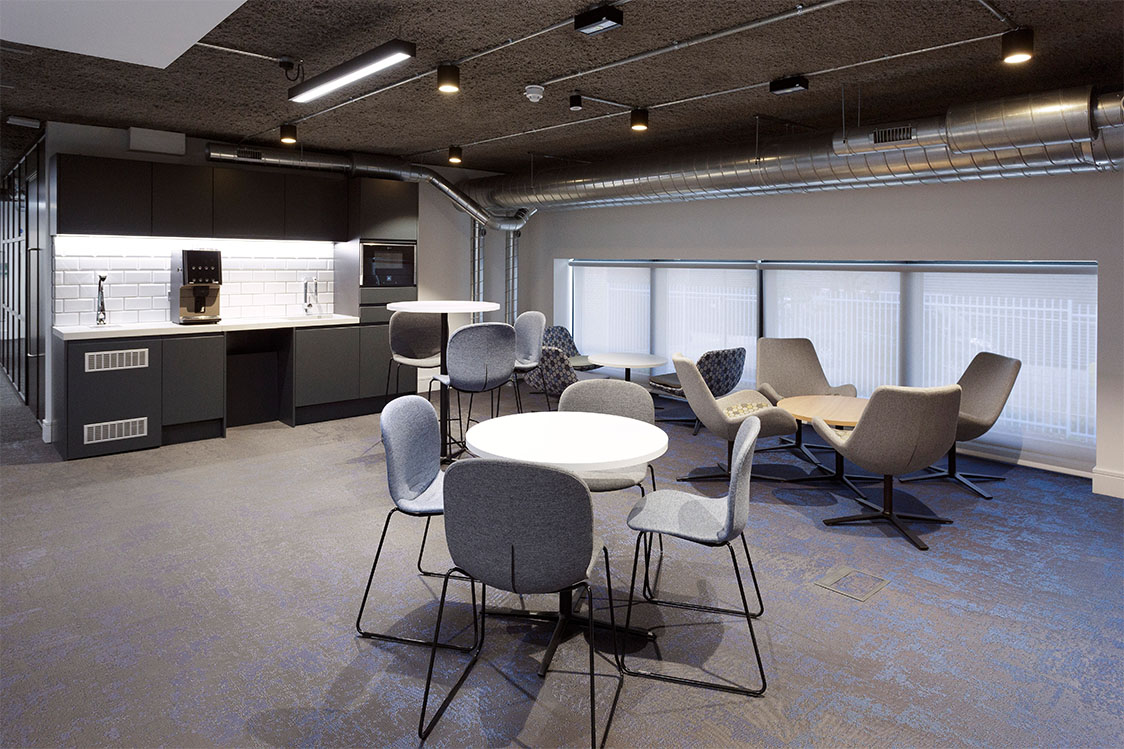
When employees want to take some time away from their desk, our comfortable breakout rooms provide slightly more casual space to give the feeling of having stepped away from work for a few minutes.

Our serviced offices in London and Manchester are located adjacent to water, allowing workers to take a walk outside and clear their head during or after a stressful day at work.

It’s important to give employees control over their environment, whether that’s the option to take a break outside, or a quiet space to sit for a couple of minutes before getting back down to work.

“The feeling of control over one’s individual environment can in fact enhance motivation, while a lack of control may lead to discomfort and demotivation,” the researchers write.

Comfort from the inside out

Finally, it’s crucial for employees to stay hydrated and nourished, but in a busy environment it can be tempting to skip lunch or to work for long periods without taking a tea or coffee break.

To combat this – and to keep your workforce hydrated and thinking clearly until the very end of the day – we provide complimentary beverages in our serviced offices in Manchester and London, as well as kitchen facilities for employees to prepare drinks and basic meals of their own.

It’s all about finding that sweet spot, where employees’ snacks and drinks boost energy levels and hydration, without taking away productivity, to give you a workplace that maximises output from everyone on-site.

Best practice for managing teams in virtual offices

During 2020, many workplaces have become virtual offices with little time or chance to achieve a smooth transition in working practices – and in many cases, literally overnight in response to COVID-19 lockdowns.

However, these working practices are nothing new. In addition to our serviced offices and meeting rooms, we have been offering virtual offices in London and Manchester for years already.

Virtual offices are a ‘best of both worlds’ solution for sole traders and small businesses, who benefit from a professional postal address and access to our on-site meeting rooms in Manchester and London, with minimal overheads.

But in response to COVID-19, organisations of all sizes are moving teams over to virtual methods of working – so what are the best ways to manage those teams remotely?

Trust and flexibility

The LSE Business Review recommends ‘devolving’ leadership and putting more trust in middle management and team leaders in order to maintain positive relationships despite being unable to meet face to face.

“This shift requires us all to consciously discuss progress, as well as share both good and bad news equally and openly,” writes business school instructor Francis Norman on the LSE Business Review blog.

He adds that companies may want to allow more flexible working hours in recognition that the employee’s home might not be a conducive working environment during normal office hours.

Instead, employers could learn to value this flexibility, with some employees working at “unusual hours” as long as targets are reached and deadlines are met.

‘Don’t be everywhere’

The article notes that successful leadership across virtual offices means managers must not attempt to be everywhere at once – and should not rely on video calls as a direct substitute for face-to-face contact.

“Internal business communications must become more organic and responsive,” Mr Norman writes, “choosing the appropriate medium for each activity.” Examples include voice calls and emails, both of which should not be forgotten in this era of video conferencing.

“Effective leaders of these distributed teams have also realised they cannot be everywhere at once and, consequently, are unable to make informed decisions.” Instead, some decisions may be made at a lower level by employees who are “closest to the action”.

Targets, not time sheets

During this turbulent time, virtual offices in Manchester and London allow organisations in some of the UK’s busiest business districts to maintain operations while adopting remote, socially distanced working practices.

Virtual offices have many benefits for businesses of all sizes, cutting overheads, eliminating problems arising from transport interruptions and commute delays, and allowing employees to work comfortably – and safely – from their own home office.

In return, managers and team leaders need to be ready to put some trust in teams to get the job done, and to be flexible on topics like working hours and constant video contact if it means targets and deadlines are more likely to be met.

The changes we have seen in 2020 are unlikely to be fully reversed in the years to come – and with many benefits to be gained from increased use of virtual offices, this is a real opportunity for forward-thinking organisations to gain a competitive edge during the upcoming economic recovery.

Engaging employees in office redesigns

This year has seen widespread office redesigns in response to the COVID-19 pandemic, whether you own or rent premises, or work from our serviced offices in Manchester and London.

We have worked closely with our tenants to provide COVID-secure serviced offices in London and Manchester, which comply with the regulations and guidelines on aspects of social distancing, cleanliness and hygiene.

But how can you engage employees in office redesigns, in order to ensure that your workforce are as happy as possible with the new office layout once it is complete?

Engagement from the outset

An article in the journal Strategic Direction earlier this year looked at office redesign projects undertaken by accounting firms in the UK, Ireland and Canada, and identified four distinct stages in the process:

  • Imagining
  • Testing
  • Stabilising
  • Reifying

These cover the design process from initial concept through to making the design a reality or ‘reifying’ it.

According to the paper’s author, acceptance by employees is greatest when they are included in the design process from the outset.

“The results revealed that the consultation element of such projects is a key vehicle for engaging employees to such an extent that they accept the new space and inherent working practices,” the article states.

“Supported by design professionals, office redesign projects are therefore a usefully influential, scalable mindset-shifting tool for achieving organisational change.”

Redesign for a COVID-secure office

The ever-changing nature of the pandemic makes it difficult to undertake a permanent office redesign in order to create a COVID-secure workplace, but there are some measures that are likely to remain helpful throughout the foreseeable future.

Some examples might include:

  • Allowing small teams to form a ‘bubble’ if it is not feasible for them to work in a socially distanced way.
  • Maintaining a minimum distance of one metre – and ideally two metres – between individuals and different bubbles.
  • Limiting the duration of face-to-face contact to less than 15 minutes (and ideally as brief as possible).

By consulting with employees before making changes, you can take their views into account, not only on the way you redesign your office space, but also on the changes you make to their working practices.

For example, you might find some employees would prefer to work from home if it is feasible to do so, whereas others might not have a suitable space to work at home, or may just prefer to come into the office.

Even if you cannot accommodate everyone’s wishes, you can potentially find a compromise that shows you have listened, and ensure the support of your staff.

Making changes together

We have always allowed tenants of our serviced offices in Manchester and London to make changes to the design and decoration – we want you to feel at home in your workspace, for maximum comfort and productivity.

If you would like to redesign your office space in light of the current situation, or you are looking for serviced offices in London and Manchester that would allow you to create a COVID-secure branch office, please get in touch and we’ll be happy to help.